
The Bay of Naples and Amalfi Coast
Ahh, Napoli, the home of pizza. Not one but two world-class ancient sites, Pompei and Herculaneum, the constant reminder of their demise, Mount Vesuvius, broodingly dominating the sky behind. Active craters, smoking fumeroles, volcanic islands, black sand beaches gently soothed by azure blue water. Sparkling Sorrento, captivating Capri, the amazing Amalfi coast. Romance, style, history, beauty, life; the Bay of Naples.
As we set sail from Ischia, our minds were full of such images. Our first stop was the ancient port of Miseno, where for a time much of the Roman galley fleet was based. Today’s small harbour is at the end of a sheltered, narrow inlet, surrounded by a natural marine park (and vast mussel farms) with enough room for a few yachts to anchor outside, you guessed it, another national park boundary. First impressions were positive; a sense of being cocooned from the prevailing strong westerlies, calm waters and a picturesque outlook with a town and headland to explore. The town makes little of its natural environment or impressive maritime history. Once the favoured place for wealthy romans to build impressive villas and baths on a vast scale, today it’s a slightly rundown beach resort with a sizeable Italian navy logistics base taking much of the prime headland waterfront, leaving just a road tunneled through the rock to reach Point Miseno. The headland gave far-reaching views over the Naples Bay to Capri and beyond, although the lighthouse was, as many similar sites are, off limits as it too belonged to the military. But it was a reasonable hike and offered welcome exercise. We were ready for a decent night’s kip, but alas the bars and private party venues lining the shore were loud, albeit in a classy fashion with jazz rather than techno music. While fun, midnight fireworks would have been an even better spectacle two hours earlier. In the wee hours silence finally settled, but the sea was restless. The ever-present south-easterly swell appeared once again, bouncing off the cliffs and into the inlet rocking us awake rather than to sleep. We greeted the morning bleary-eyed, but we needed to complete some boat jobs and provision, so we spent another, thankfully quieter, day and night here. But Miseno was not finished with us yet. The final sting was on pulling up the hook to discover two six-metre metal poles wrapped around the chain. Mercifully the anchor itself was clear, so a bit of heaving and careful use of the snubber freed us from our unwelcome detritus and were on our way. We believe they were the remnants of a former mussel farm, now long since collapsed into the sea. Nevertheless, we returned to Miseno on a number of occasions as one of the only safe anchorages available to foreign yachts, who cannot use much of the national park areas for even daytime anchoring, let alone overnight. Each time we were here, we saw several other vessels pick up stuff in their chains and merrily deposit it around the bay. Anchor trip line strongly recommended! We even had another 35 foot motor RIB foul our anchor chain…. see the Blog!
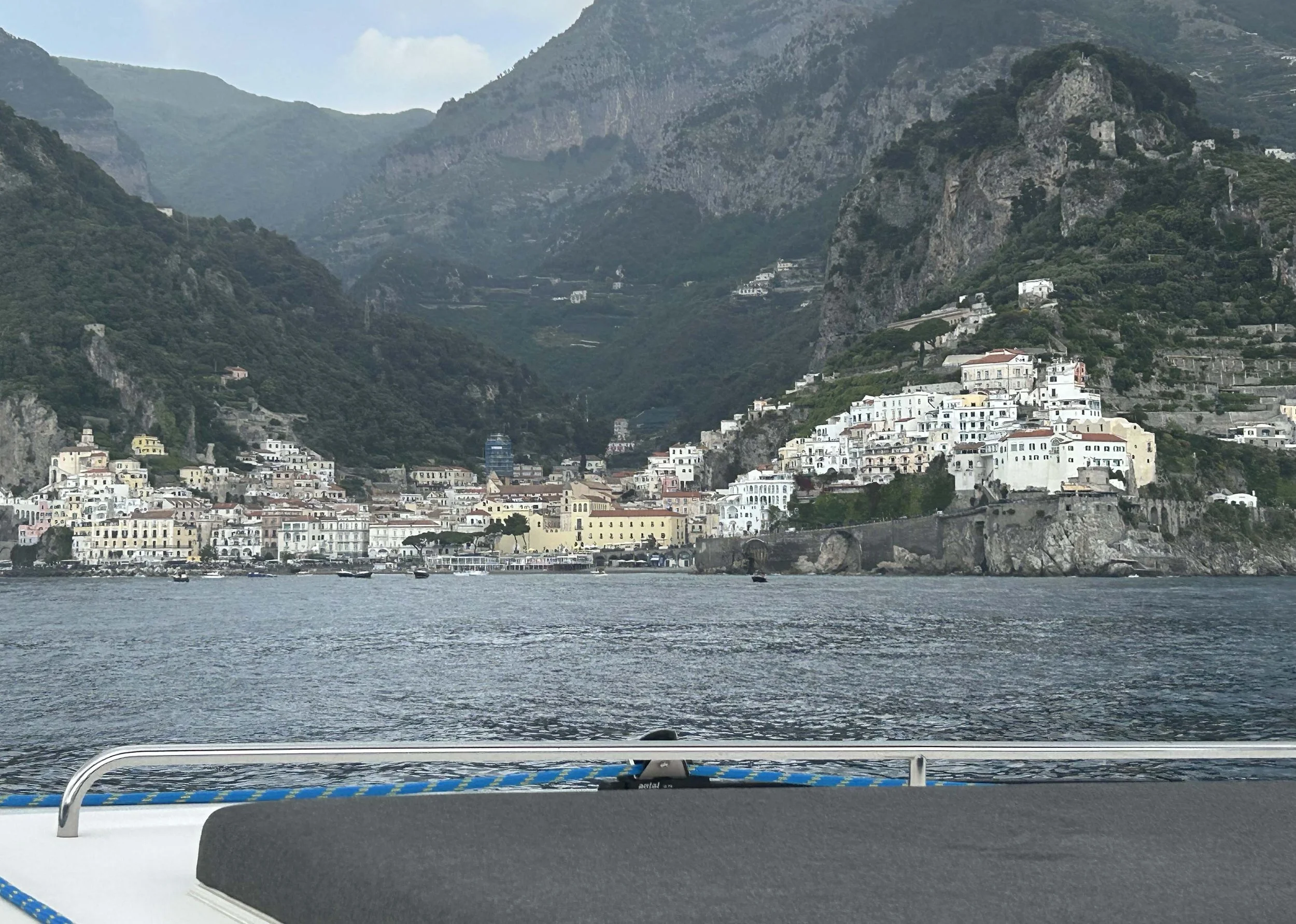
Next stop was Cetara, a small harbour between Salerno and Amalfi and one of the few that was both big enough to take us and affordable enough for us to want to go! Winds were better than expected and we raced across Naples bay, past Capri, at a gallant 10 knots albeit in the rain, making us rather early for our 3pm entry time. So we anchored off Amalfi – why not!? – and were rolled around for a pair of hours watching endless tripper boats and ferries plying their trade.
Cetara is a working port, a large fishing fleet with impressively modern tuna and anchovy boats taking up most of the outer quays. There was only one transit berth, and we stern-boarded into it to be greeted by very friendly, helpful team led by the harbour’s boss, Domenico. We spent a very pleasant week there, extended by two days due to weather which Domenico was incredibly flexible about and gave us a good discount on the extra days. Thank you Domenico and Team! Read our full review on Navily.
The reason for spending a week in a harbour was to explore ashore, particularly Pompei, Salerno and the Amalfi coast. All were achieved, but with challenges. We spent 7 hours getting to Pompei and back on rail replacement buses, the trains not running until July due to track work. It was worth it however, and the excavated site is impressive and gives a real sense of what life was like before the AD79 Vesuvius eruption which froze the town, and several thousand of its inhabitants, exactly as they were that fateful day. It was fascinating and moving in equal measure, although a guide book or audio tour is required as the signage and information is poor. We did think about a hike up the volcano the following day, but the 7 hour round trip in truth put us off. Weak, I know, but the weather also played its part by being wet and dreary for most of our time in Cetara; the top of Vesuvius was shrouded in cloud for much of the week. So we spent time chilling in the off-beat towns along the coast, exploring Salerno and its impressive medical history, and…. meeting our two nieces who were coming to join us for a few days sailing. The day after they arrived we planned to take the local bus to Amalfi, but high winds meant the Amalfi ferries from Salerno were cancelled so the crowds were packed onto the buses instead. Three passed us, all denying us a ride, so we gave up and consoled ourselves with ice cream instead!
We tried again two days later, another drizzly day, and were successful in reaching the famed town. We escaped the milling crowds by walking to the top of the one-street town to the truly interesting and well-done paper museum. Yes, paper. Amalfi used to have a thriving paper industry, making top quality paper from cloth. The mills counted the Vatican among their patrons, but modern methods and the alternative of paper being made from wood chip rendered their product simply too expensive, so today only a small amount of paper is made by a couple of traditional mills. The rest of Amalfi is everything a tourist town should be; crowded, slightly tacky and full of shops selling mass-produced, overpriced souvenirs. It’s charmingly set, but somehow is not a pleasant place to spend time. But time we spent there, as the bus queue to get back to Cetara was immense. We eventually got on the third bus after more than an hour’s wait. We can say ‘we’ve been to Amalfi’, but we’d not rush back. We were there on a drizzly day in May; what it’s like on a sunny day in August’s peak season we’d definitely rather not experience.
There is no denying the Amalfi coast’s beautiful scenery, dramatic coastline and small towns perched along the cliffs, but it’s challenging to get around by land and the coastline does not make for relaxed yachting. It all felt a bit like hard work and, in our opinion, did not live up to the hype. Maybe we didn’t try hard enough, or perhaps our experience reinforces that we really do prefer spending time seeking out the less-visited places that only a yacht can take you mixed with the occasional foray into the bustle of the more traditionally touristy spots.
From Cetara we set sail into headwinds to spend the night in what we thought would be a well-protected anchorage on the eastern side of Capri. All was well as we arrived, although the steep shore and deep seas force dropping the anchor in close proximity to the cliffs which feel a little overbearing above. The sun disappeared from our decks about two hours before sunset, and the infuriating south easterly swell appeared right on cue about 0300. We left at first light, motoring around the famous arch at the south east corner of the island, before sailing in variable winds towards Procida where our nieces were disembarking from. We had a decent enough sail, an afternoon north-westerly propelling us handsomely and almost in the right direction! To be in a calm bay overnight is worth so much, and we have learned that in truth there are scant such bays in the whole area. It’s no wonder they get busy, but being early in the season does have advantages. As soon as we had deposited the nieces on a ferry to the mainland, we returned to Miseno where we spent the best part of a week, meeting other friends and having day sails to the few day anchorages we are allowed to visit on Ischia and Procida. All was good, but we are definitely ready to move on.
So what do we think of the Bay of Naples?
When we first planned our sailing year, we really thought the Bay of Naples and its islands would be a great place to spend a month or so before heading south. We had not visited here previously, by sea or land, and the books do a terrific job of selling the place. But our feelings are mixed. From a sailing perspective, the winds are often light and changeable, but when there is a breeze it usually fills from the north-west at F4 or so, which is decent enough. However, there is little shelter in these winds along much of the mainland coast, and due to the marine parks around the islands there are only a few protected anchorages available to visiting, foreign yachts. Even with a permit to cruise the islands and enter the Nettuno marine park, foreign boats can only anchor in certain areas during the day and almost nowhere useable by night. Local yachts have different and much more lenient rules, so you’ll see them happily sitting at anchor in the most sheltered and picturesque bays which are simply off limits to us pesky foreigners. Even worse, from 1 June to 30 September the island permits given to visitors allow no anchoring anywhere, day or night, and you still need a permit (40 Euros) just to sail in the park’s waters. The marinas are outrageously expensive (our highest quote was 580 Euros per night, in Stabia marina; we declined) and the water is both choppy from tripper boats and a persistent south-east swell. Moreover, it’s alarmingly dirty and sadly contains a lot of floating rubbish and detritus on the seabed. Many fellow sailors have experienced fouled anchors, as we did in Miseno. On the sightseeing side, many places felt somewhat opportunistic, everyone wanting to grab the hard cash of what are perceived, wrongly, to be wealthy yachties. Similar sentiments were expressed by all those liveaboards we encountered here, none of whom, sadly, would recommend the area to other sailors. We can see why there are few charter companies here; it’s just not a relaxing place to sail. On the positive, the scenery is fantastic, the smaller tucked away villages are authentic and much better value, and the local people are brilliantly welcoming and friendly, a stark contrast to the legendary Italian bureaucracy and officials. The history is amazing and we have thoroughly enjoyed getting ashore and walking or cycling around the lesser-known Roman remains, discovering the warmth of the locals away from the hard sell of the touts. As a bay to spend a week or so in, perhaps en-route north or south out of high season, it works well, but it’s not an easy long-term, liveaboard place. For all its raw beauty, fascinating history and being a living geology lesson, we were totally ready to leave the Bay of Naples and point our bows south.