Technical, Equipment and Maintenance
Here’s where we take a look at some of the equipment we use and what we think of it. We’ll also add some thoughts on what we learn about sailing Skylark, what work we have done and any improvements we make.
Scroll down the page or clink on the links below to go to a specific topic.
Our tender: Rebel Superyacht 330
We spent a lot of time looking for the right dinghy. Keeping weight down was a consideration alongside having something that could carry decent loads and be easy to drive and manoeuvre, hence the idea of a floating console with a wheel and throttle arrangement. Highfield seem to have cornered much of the market, but were a bit heavier and more expensive than the Rebel. We found Rebel Leisure through an internet search and had a long chat with Graeme at Rebel RIBS before buying the tender through NJC Auto Marine in Poole, UK. NJC’s owner, Neil, was tremendous and put a package for the tender, Tohastsu 20hp outboard, cover and trailer together.
We have been delighted with the Rebel. It looks smart, with the tan seats and dark blue sides, An aluminium hull and hypalon tubing make it rigid, strong, relatively light and so easy to drive. Add nice touches like two boarding steps, lockable storage, electric bilge pump and lights for night use and it’s a definite recommend!
The arrangement for tender stowage on the Neels is unusual. Rather than davits, the topping lift is used as a hoist to raise and lower the dinghy onto chocks set into the central hull. (For those wondering, while the topping lift is loose, the boom is held up by the lazy jacks which have been strengthened specifically to take the weight of the boom and mainsail.) It takes a bit of getting used to, but overall works well and keeps the stern and transom clear.
Estarli e20.7 Pro e-bikes
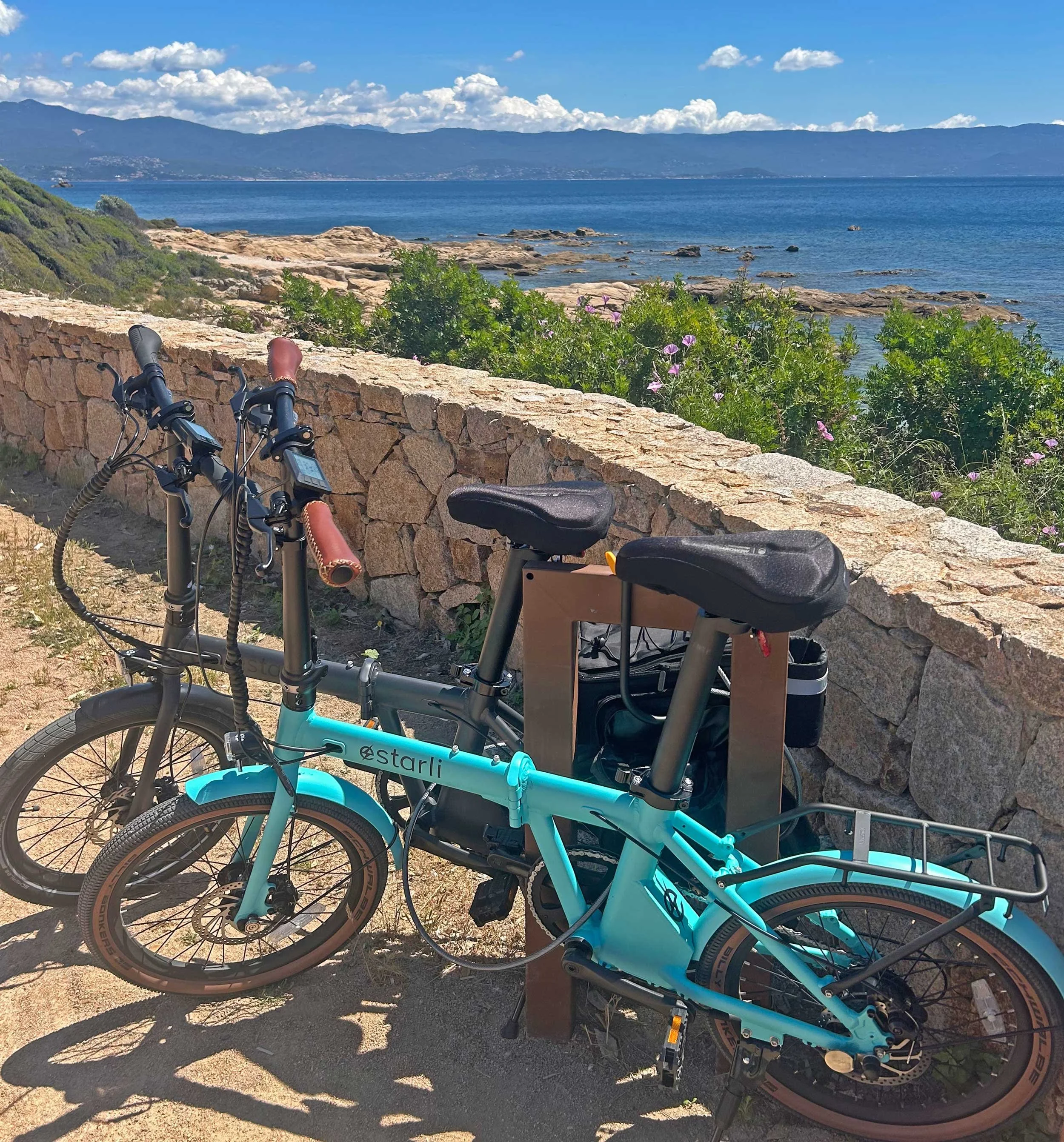
These have been a great purchase! We can explore further afield, use the really handy racks for panniers or smaller shopping loads, and they are comfortable enough to use for several hours without ‘numb bum’ setting in. They work on the ‘assisted pedalling’ principle; you have to pedal to get the electric assistance, which has 5 levels and can be turned off completely if you want an extra work out. The motors have sufficient oomph to make light work of steep, twisty roads up to hilltop villages and give a welcome boost to tired riders at the end of a long day. The bikes allow us to visit places that we’d otherwise have to hire a car to see, and we get some decent exercise into the bargain! We tend to use the lowest electric assist we can which means our range is pretty good; we can cover 40 miles on a single charge, more if we turn assist off on the flat and downhill.
At 18kg they are not the lightest e-bikes around, but they are easily manageable even using the tender. They fold up small enough to stow away onboard or take into a café, have built in locks (although we also have a sturdy chain and padlock) and are made in Great Britain. The 20 inch wheels give great stability, manoeuvrability and comfort and we invested in padded seats for extra support. A super addition to our cruising life.
Rocna Vulcan anchor
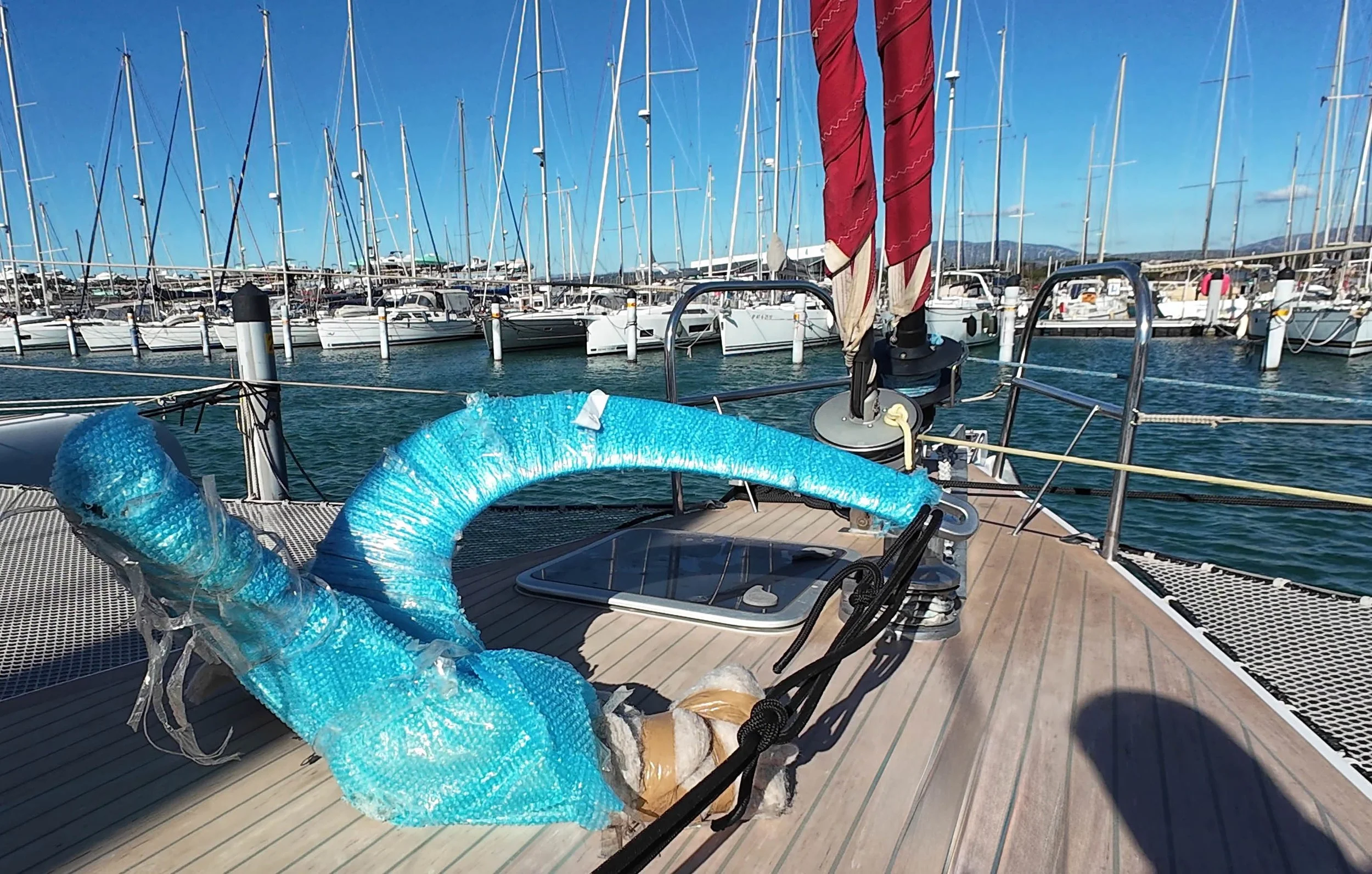
Why we wanted to upgrade the anchor. One of the first items we upgraded on Skylark was the anchor. We knew our preference was to spend the vast majority of our time at anchor rather than in marinas, exploring lesser known bays and having that wonderful feeling of being a little more connected to nature and our surroundings. The Neel factory-supplied Kobra 25kg anchor is up to the job ok, and we know several Neel 51 owners who have been very happy with it and have kept it. But for added security and, more importantly, the reassurance heavier, modern ground tackle gives us, we decided to upgrade.
What models did we consider? After much research, and looking at all manner of online video comparisons and tests, we narrowed it to two contenders; Ultra Marine and Rocna Vulcan. We knew the Mk 1 Rocna with its distinctive roll bar would not fit in the bowsprit, hence looking at Rocna’s Vulcan range. They are both reassuringly pricey; Ultra only make their products in stainless steel, whereas Rocna have both stainless and galvanised versions. Helpfully, both companies can provide a life-size template of their anchors, so we printed these out and then transcribed them onto stiffer cardboard to test.
Which one did we choose? The final decision on which one to go for ended up being easy. It turned out the Ultra simply didn't fit through our bow roller due to its slightly angled shank, so Rocna Vulcan it was. What an excellent idea those templates are! We went for the 45kg galvanised model - one size up on the Rocna chart recommendations to take account of the additional windage of a multihull, despite it being a lighter boat than an equivalent mono. A new anchor shackle, with an 11 ton breaking strain, completed the purchase. We checked our chain too - 12mm galvanised - and all was well.
Our verdict; was it a worthwhile upgrade? A resounding ‘yes’! The Rocna has not disappointed in over 100 nights on the hook in our first season alone. It digs into sand, mud and light weed beautifully, the heavy tip burying deep into the seabed, but on thick seaweed and shingle/rock it can take a couple of goes to get a reliable hold. Once set it has never dragged, including in 50 knot gales and over 2 metre swells, which unsurprisingly were miserably uncomfortable! We are generous with the scope, preferring 4-to-1 or more if there is swinging room. We rig a snubber to help take shock loading and although we have the deck hardware to set a bridle up we have not found it necessary.
As an aside, we are just as conscious of swell as of wind when choosing an anchorage. Skylark will sit head to wind quite nicely, but in light winds, say less than 5 knots, she’ll tend to sit beam onto any swell which Nick finds particularly irritating. A second stern anchor (we have a 20kg Danforth kedge) can help, but does add time and complexity when we are just the two of us.