
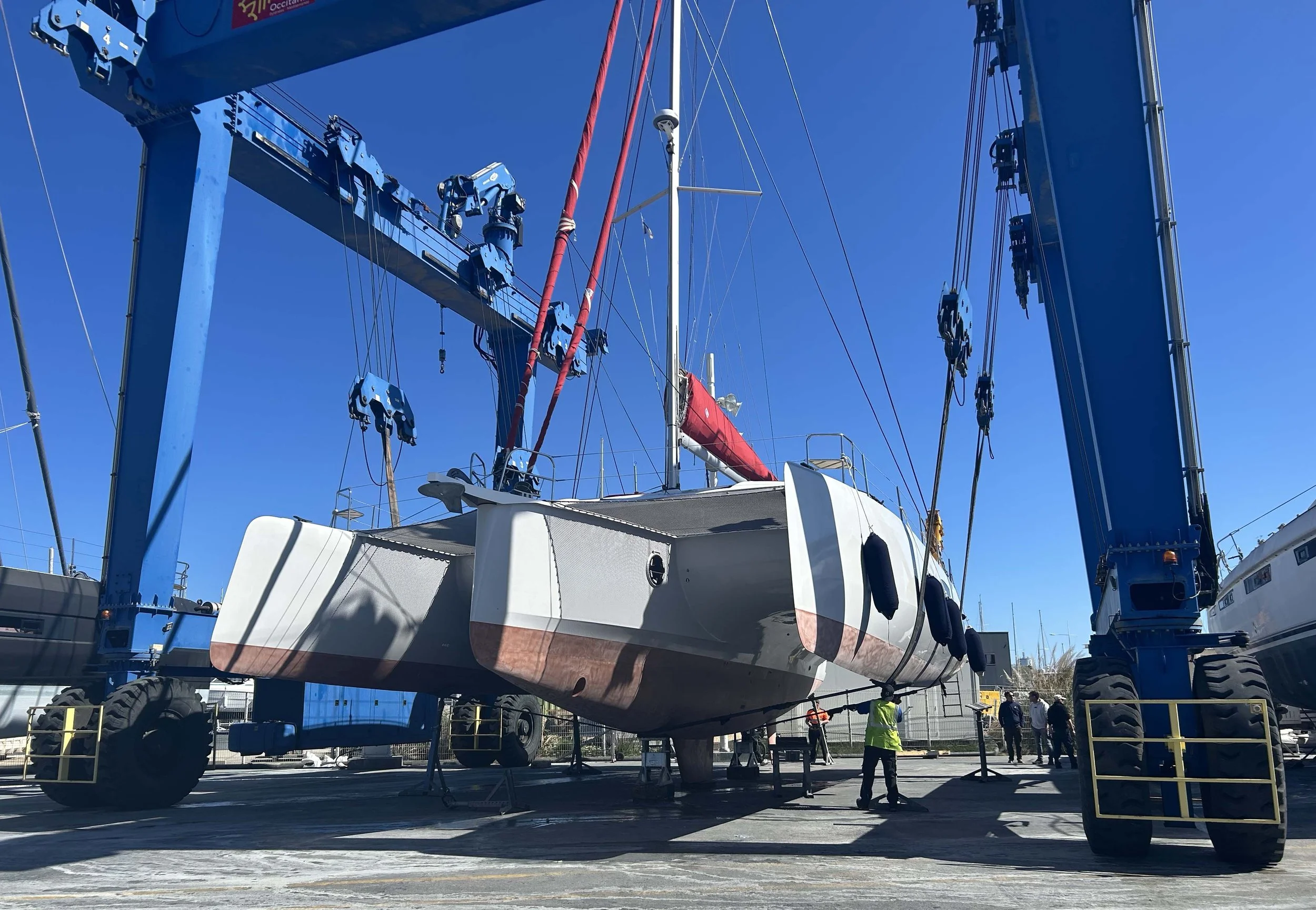
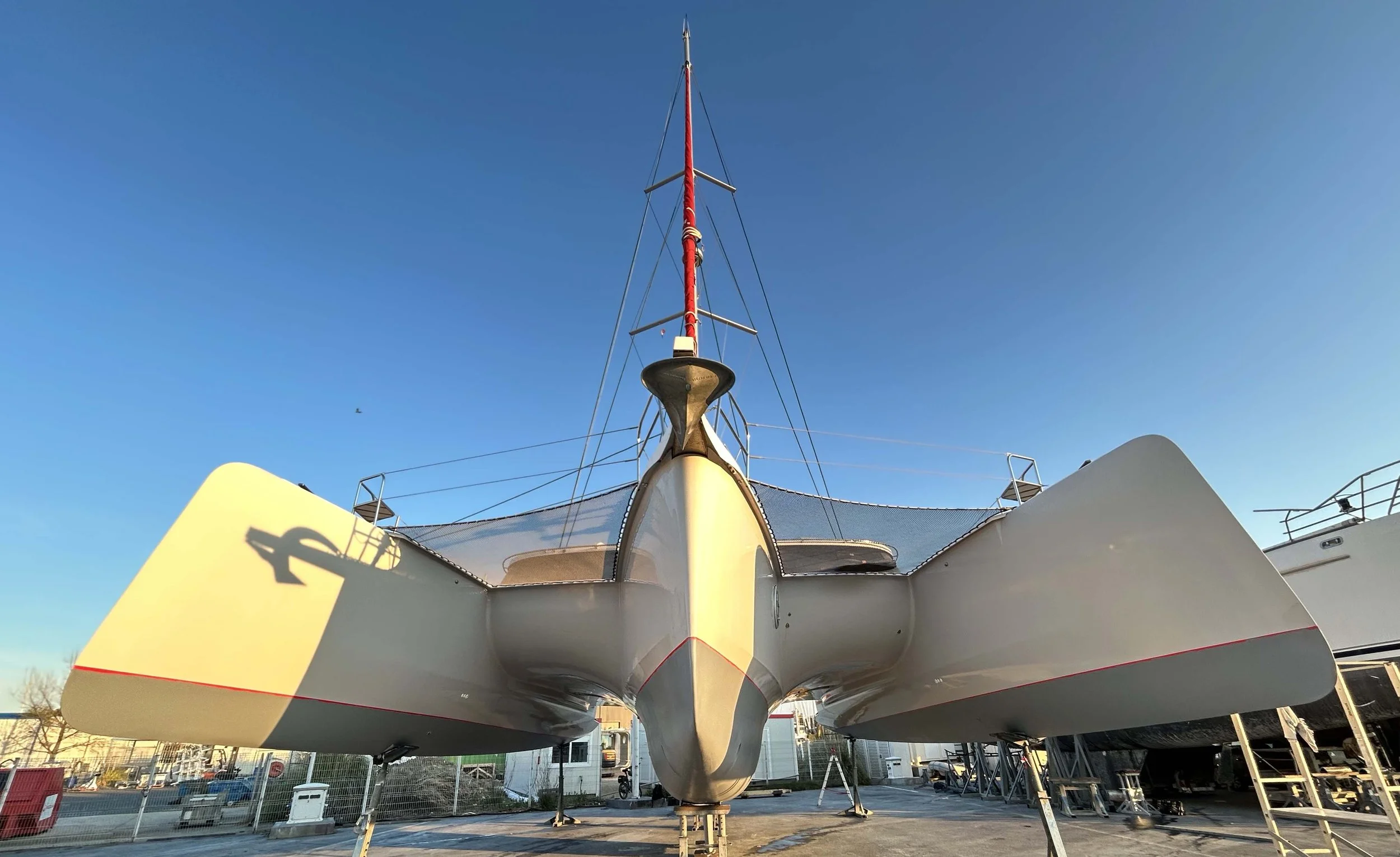
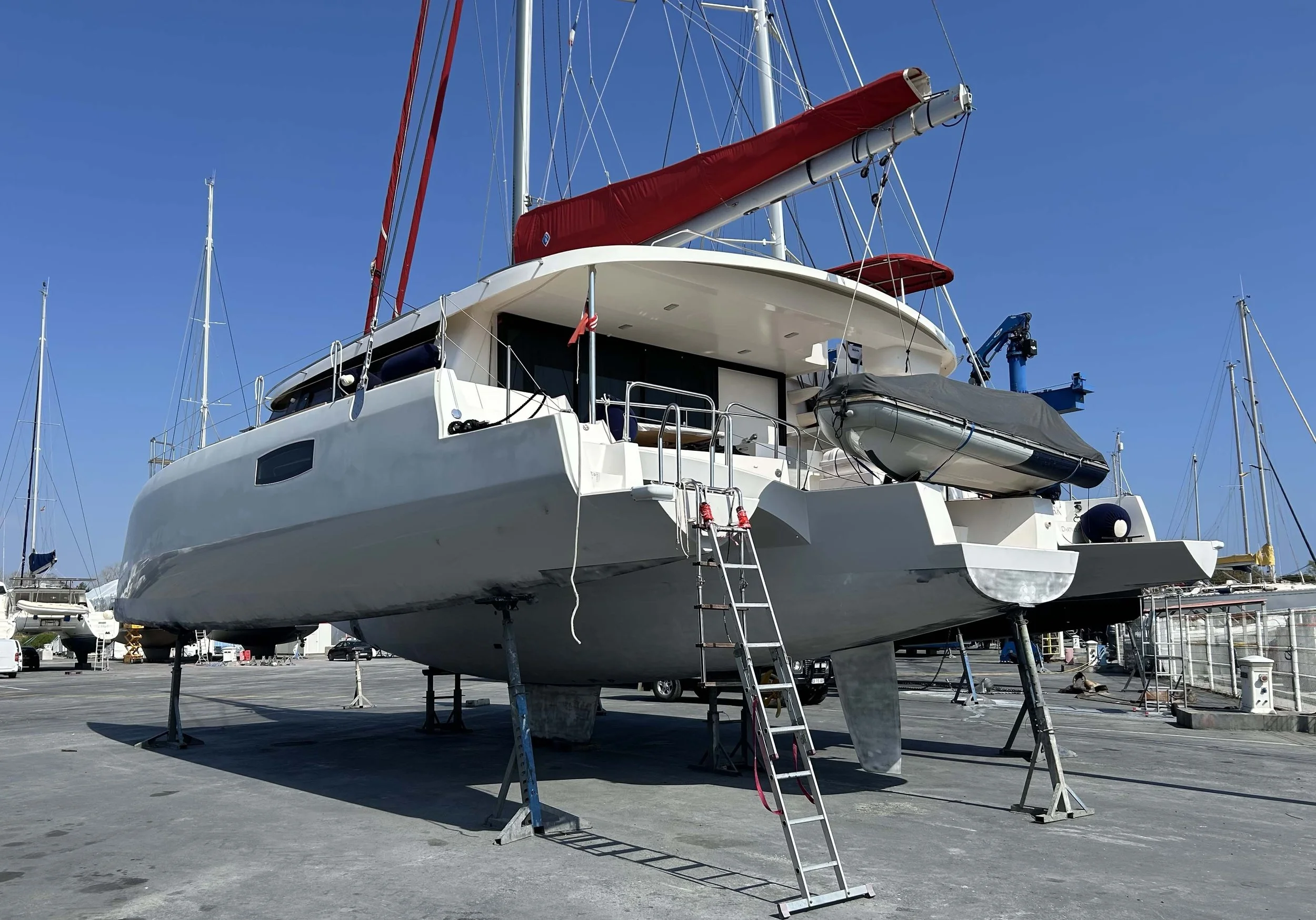
Apart from the odd thing that needed attention as part of the sale, we really did very little work to Skylark before our first season. It seemed prudent to have some work done before we set sail again in 2026. We knew the big job was the antifouling, which was largely in good order when we hauled out briefly for the survey in December 2024 but when we had the hull cleaned by a diver in summer 2025, he reported that the antifoul coating was bare in places and would benefit from a refresh. We needed (another) repair to the windlass chain counter, the fuel gauge had packed up and we’d broken the catch on the saloon door. We also wanted a rigging check and then there was the routine stuff like servicing winches. So, we set aside time March to complete the work, and booked a haul-out and three weeks on the hard.
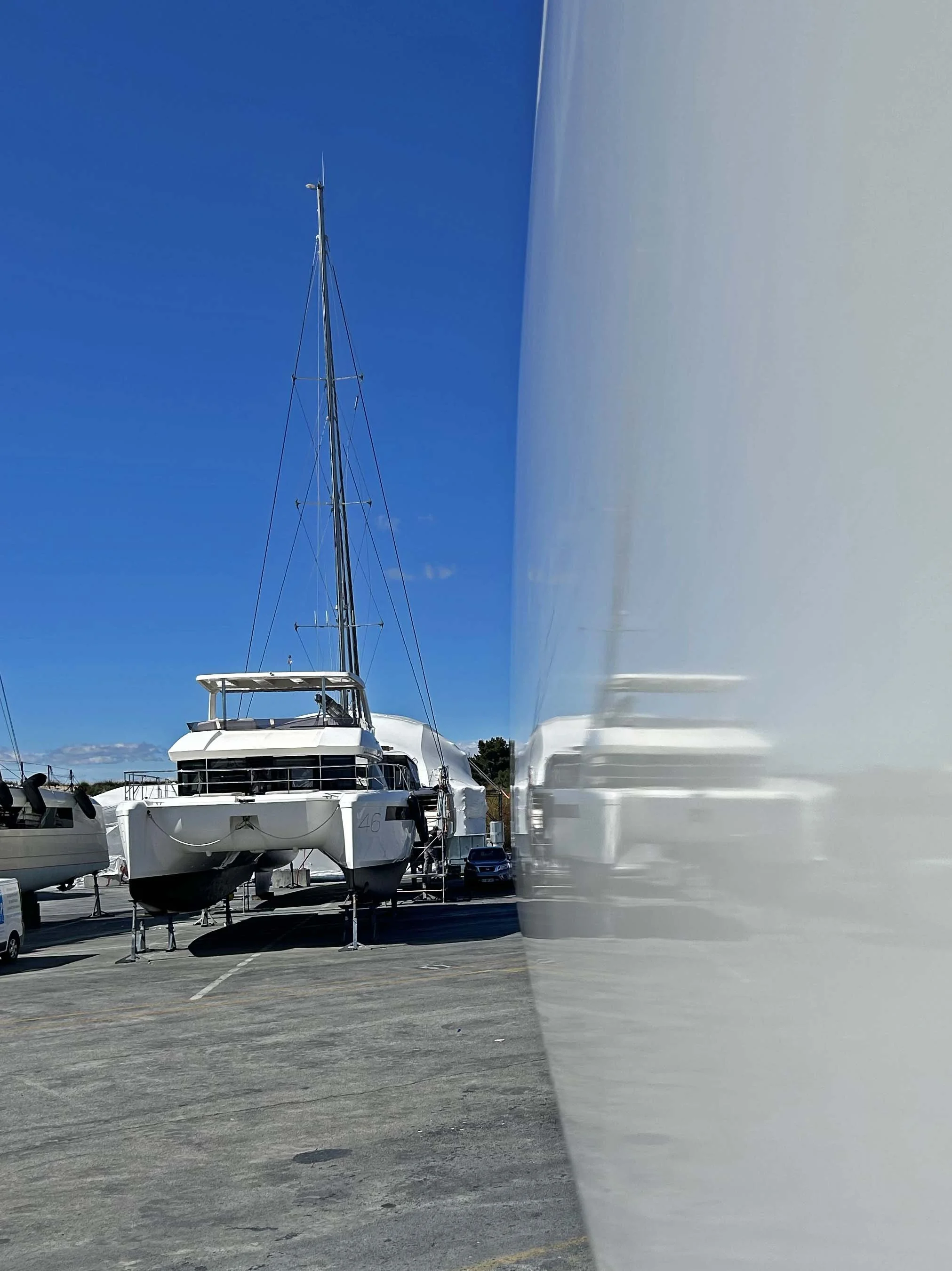
Skylark was moved down the coast from Port Leucate to Canet-en-Roussillon, a major yachting centre with a slip wide enough and crane big enough to handle us. The Team at Azure Boat Services had moved her for us as part of the work package we had entrusted to them. She was hauled out on 10th March. Nick joined her after the first week and spent happy days fettling with all manner of things nautical under a refreshingly blue, sunny sky which was a welcome improvement on the UK’s dreariness.
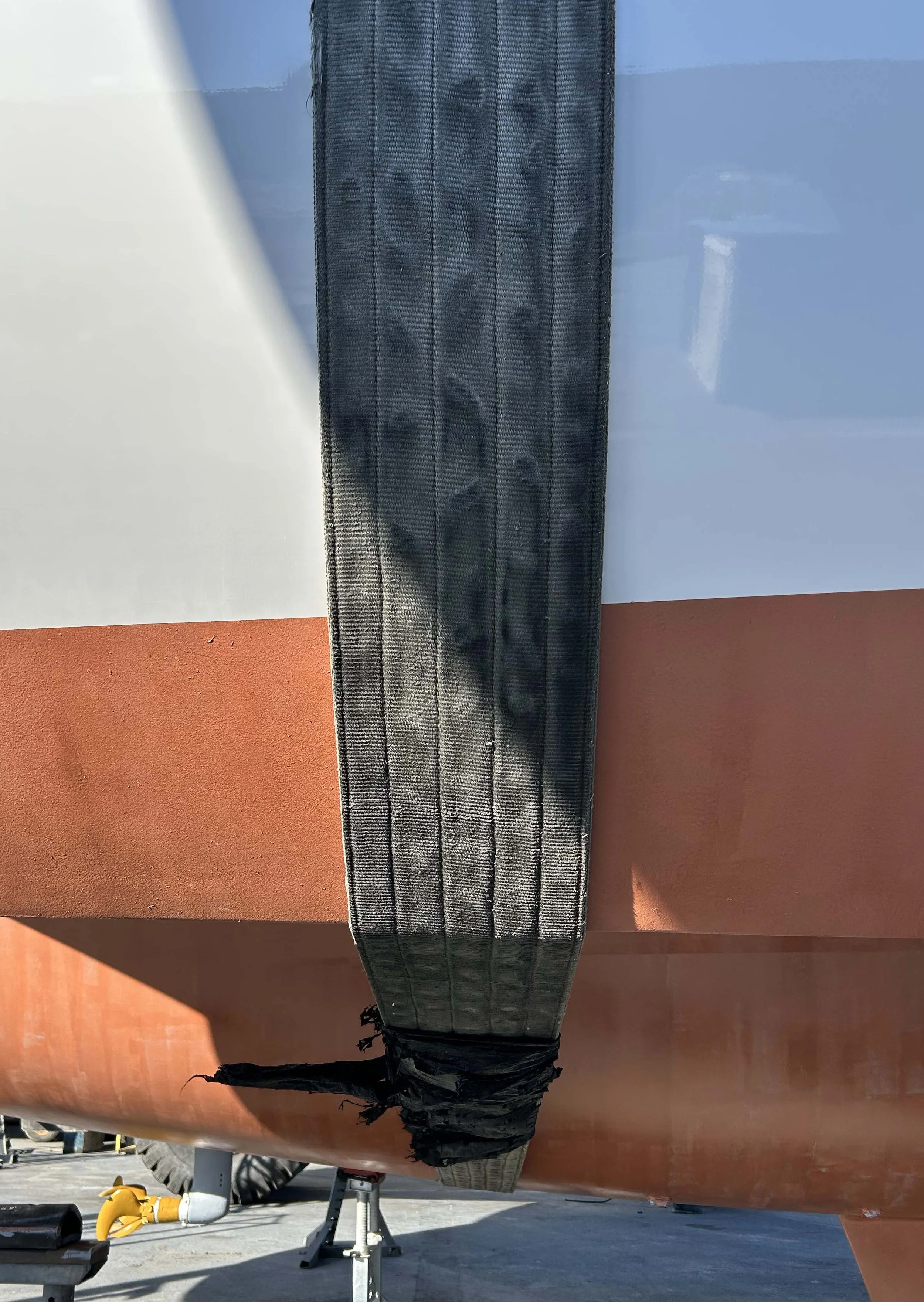
Haul Out and Maintenance, March 2026.
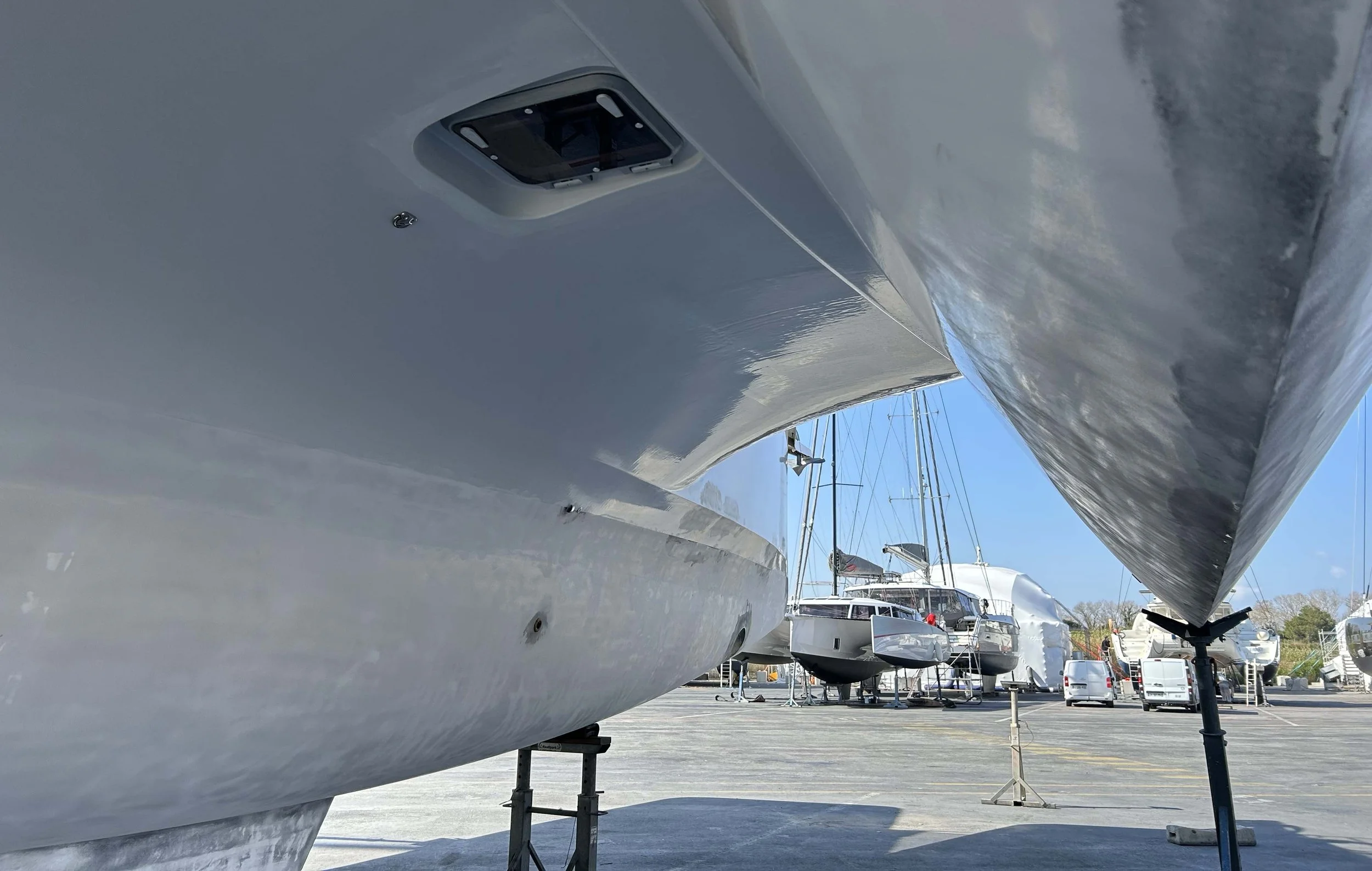
Antifouling. The subject of endless conversation in most marinas, owners groups, magazines and online articles. Which is best, for which seas, in which climates, for what use of the yacht etc etc. After much research, we plumped for Coppercoat. Yes, pricey, but being an epoxy system rather than paint-based, we are banking on it lasting longer, which means we shouldn’t need to haul out so often – a huge bonus for us in time, expense and of course finding facilities that can handle a trimaran in the first place. The theory is a diver can clean the hull annually at a cost of around £500 in a few hours, compared to several thousand for a haul out, clean, and antifoul recoat over perhaps a week. Let’s hope the theory turns out to be correct!
Applying Coppercoat is a lengthy process, and is best done within strict humidity and temperature parameters for optimum adhesion and curing. The hulls were first pressure washed, scraped and then air-blast sanded back to the gelcoat. Minor imperfections were filled, sanded again and washed. Two coats of Hempel High Protect II solvent-free primer were applied, then four coats of the all-important Coppercoat. Et voila! We’ll report back on performance of the coating….
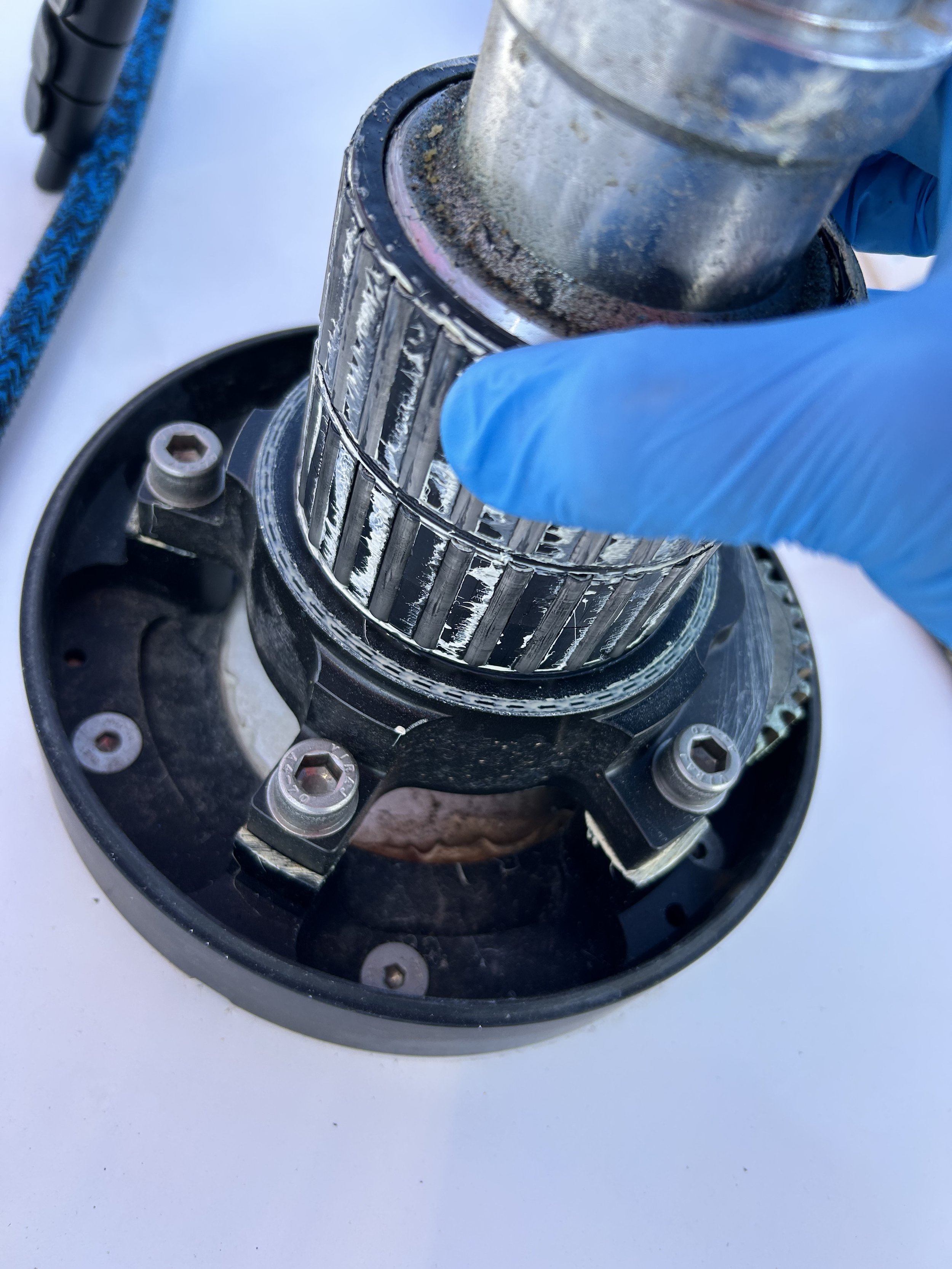
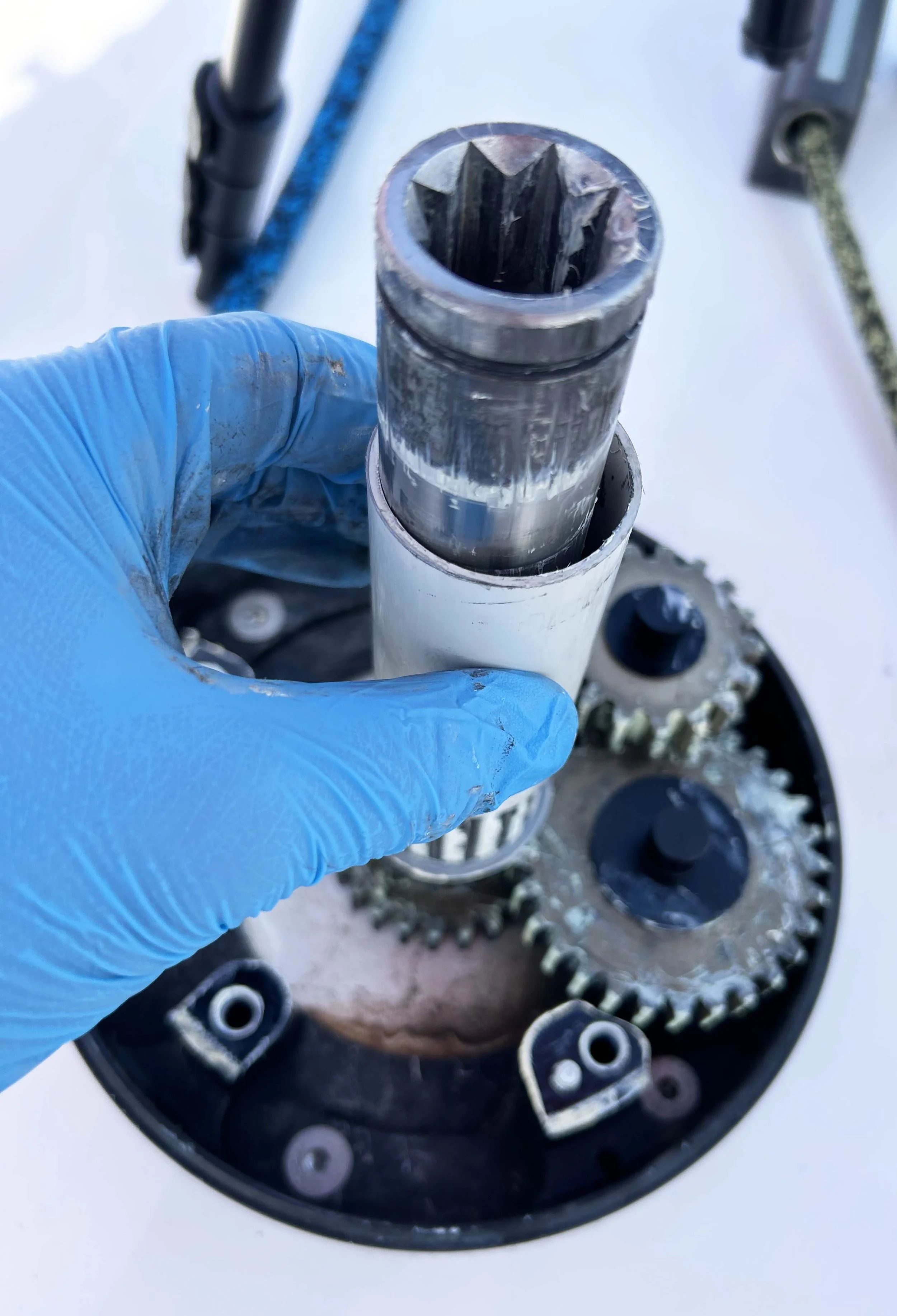
Winches. The centre powered winch was becoming a little stiff, so Nick serviced all three winches – probably for their first time. The first winch took about 3 hours, with a video (I must have looked a right eejit talking to myself with a running commentary on what I was doing!!), zillions of photos and painstaking care not to have cogs, pawls, springs and widgets flying all over the yard. The second took a little less time, and the third about an hour and a half. Good experience, and I am pleased to report all three winches still function as intended by Antal, and in the right rotation too which is a bonus! White spirit was excellent at removing the old grease and, in my view, better than diesel which I have used while helping another sailor service his winch.
Solar panels. Four new Solbian panels, to add to the 8 already present. We had found over the year that on sunny days at anchor the solar would just about keep up with demand, but when panels were shaded by sails or on cloudier days we needed an hour of engine or generator to boost the batteries. We have 900AH of AGM Gel batteries – plenty for our daily needs if we can keep them topped up efficiently. The extra solar capacity should mean less fossil fuel burnt while allowing for longer use of power-hungry items like the air fryer (which, as an aside, is a brilliantly versatile cooking appliance to have on a yacht). At some point we will need to swap the batteries out, and that starts the whole AGM vs Lithium debate. But we are not there yet.
Liferaft. The large, heavy, 10-person liferaft had been fitted, presumably by the factory, into a stowage in the port lazarette locker; a quite ridiculous and unsafe place to have it. It took two of us nearly 8 minutes huffing and puffing to lever it out of the locker, an evolution that in the excruciatingly stressful emergency of launching it for real would have been infinitely more taxing, and perhaps even impossible in heavy seas. We designed a new stowage on the deck, under the helm station. The payoff for liferaft accessibility was the loss of part of a seat, but we rarely used that end of it anyway. The brackets were fashioned bespokely out of stainless steel to match the existing seat supports, and we had a new backrest made so we can sit comfortably looking aft on the remaining section of the seat. All in all a far safer location for the liferaft should we ever have occasion to deploy it. And the new G&T seat works nicely! Win-Win.
Cleats. The forward cleats are not really forward – they are some 3 metres from the ama bows. So, two new cleats were installed as far forward as possible, with a three-way purpose in mind. A better point for mooring, especially on piles; a strongpoint to attach a low-friction ring or block to lead parasailor tacklines through; and in case we ever need to attach a bridle for the anchor or buoys. We sourced the same cleats as factory fitted, made by Goiot and etched with ‘Neel’ (which worked out about £25 per letter….ouch!). We had two more fitted at the stern too, so we can lead cross-lines when stern-to in a marina without doubling up on the outer cleats. For good measure we had 4mm stainless steel backing plates fitted to all cleats. We know of other Neel 51s that have ripped a cleat out, admittedly in extreme conditions; a piece of steel is far cheaper than a whole cleat and deck repair following failure and accords with our preference to over-spec equipment for peace of mind and longevity.
Black water holding tanks. Skylark has four 41-litre holding tanks, but no way of emptying them other than into the sea when far enough offshore. To comply with emerging regulations, notably in Greece, we had pump-out valves fitted to the two ama tanks. This was a relatively inexpensive upgrade – essentially some pipework and a deck valve.
Nick also kept himself gainfully occupied with a plethora of other tasks…….
· Design, cut and install a new tech room shelf, transparent so the batteries underneath are visible.
· Design, cut and install a worksurface protector on the wooden galley worktop.
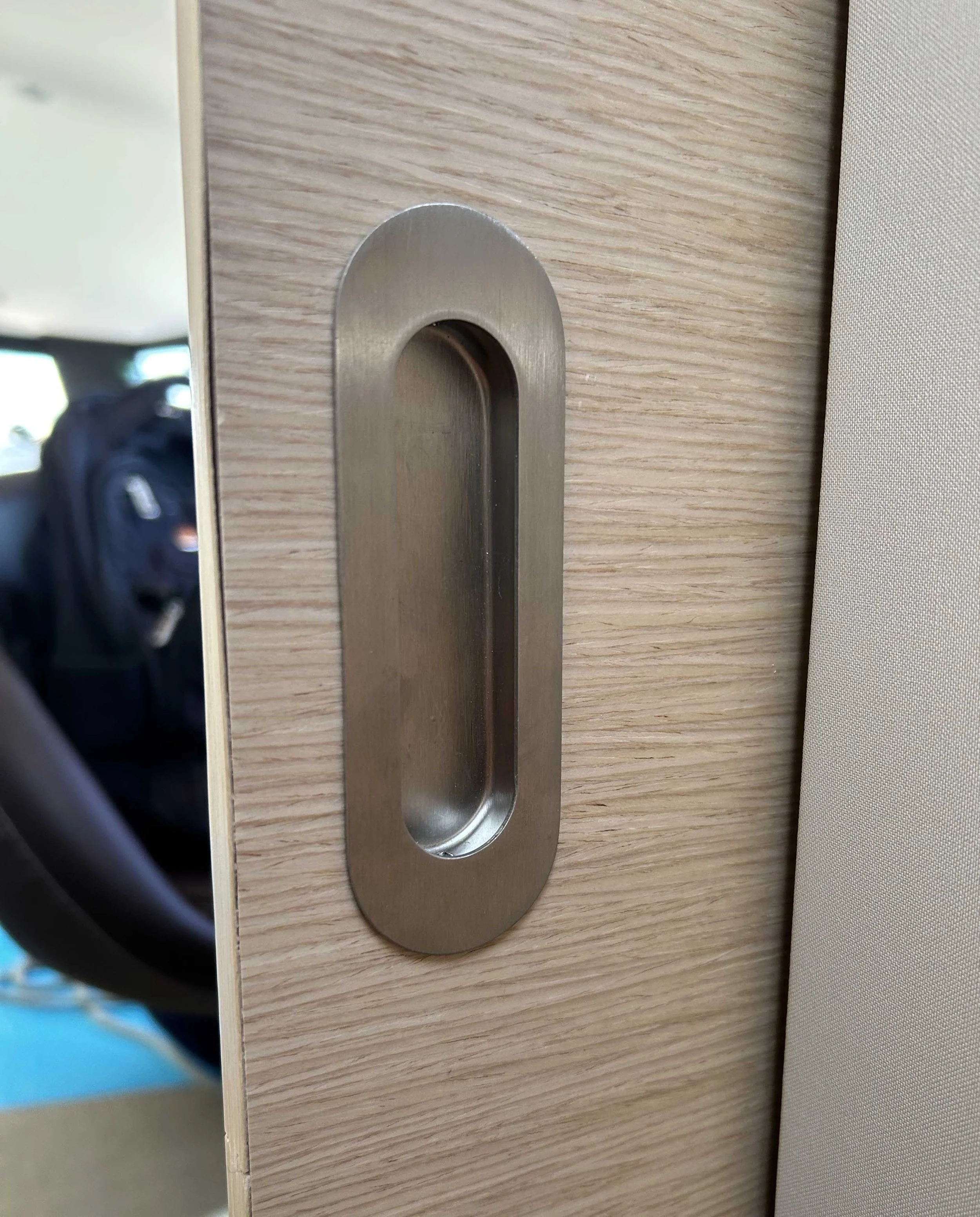
· Routed out indents in the ama privacy doors and fitted new door grabs to stop folk pulling on the edge of the hatch and breaking the flimsy trim.
· Replacing a chafed genoa sheet with two new sheets so we now have a spare too.
· Redesigning our mooring system to have four shorter 22mm mooring warps with a shock absorber permanently fitted. These are made fast to the shore and the mooring line from the yacht run through a stainless steel thimble in the free end and back to the boat, so we retain the ability to slip rapidly if we need to.
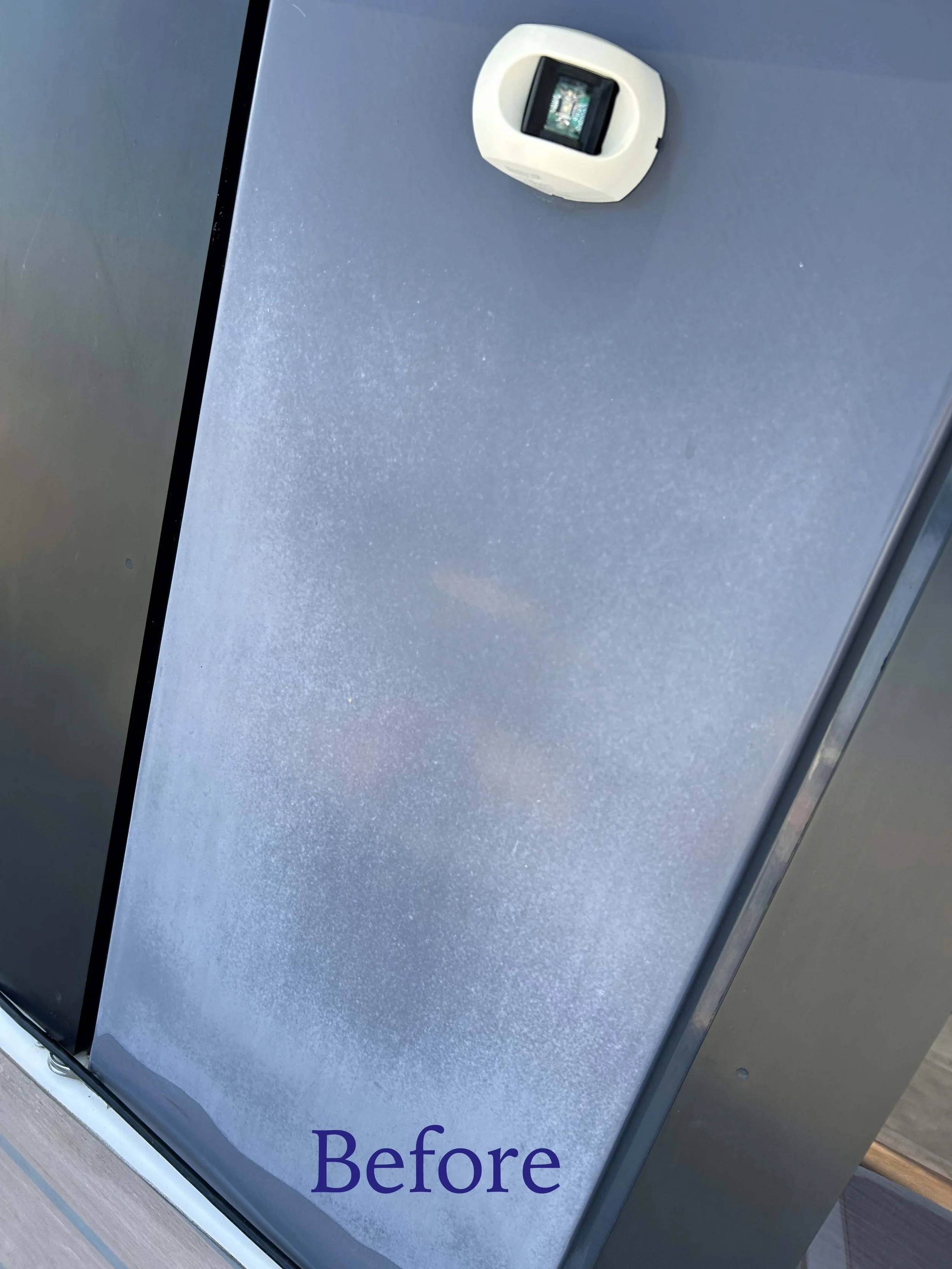
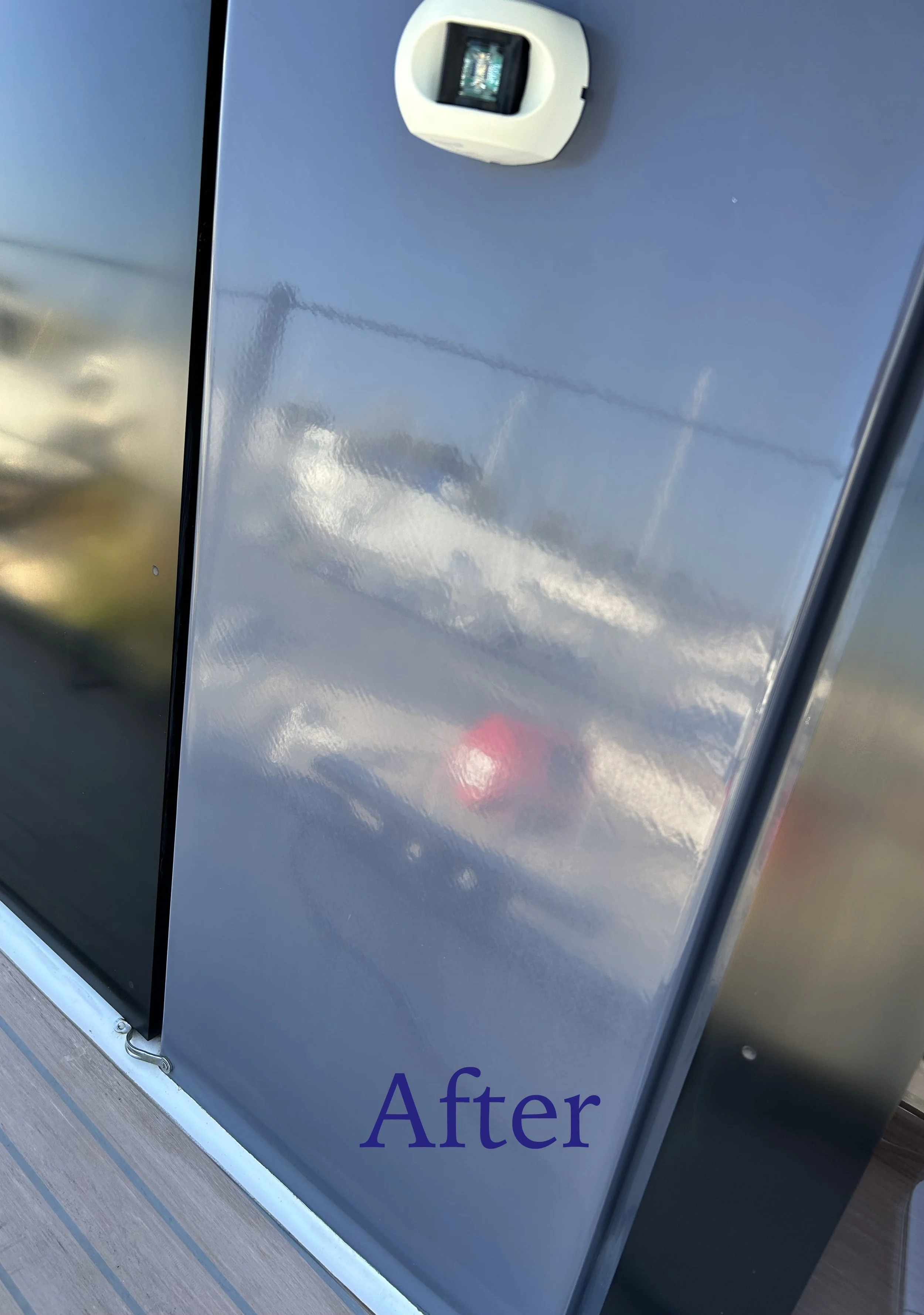
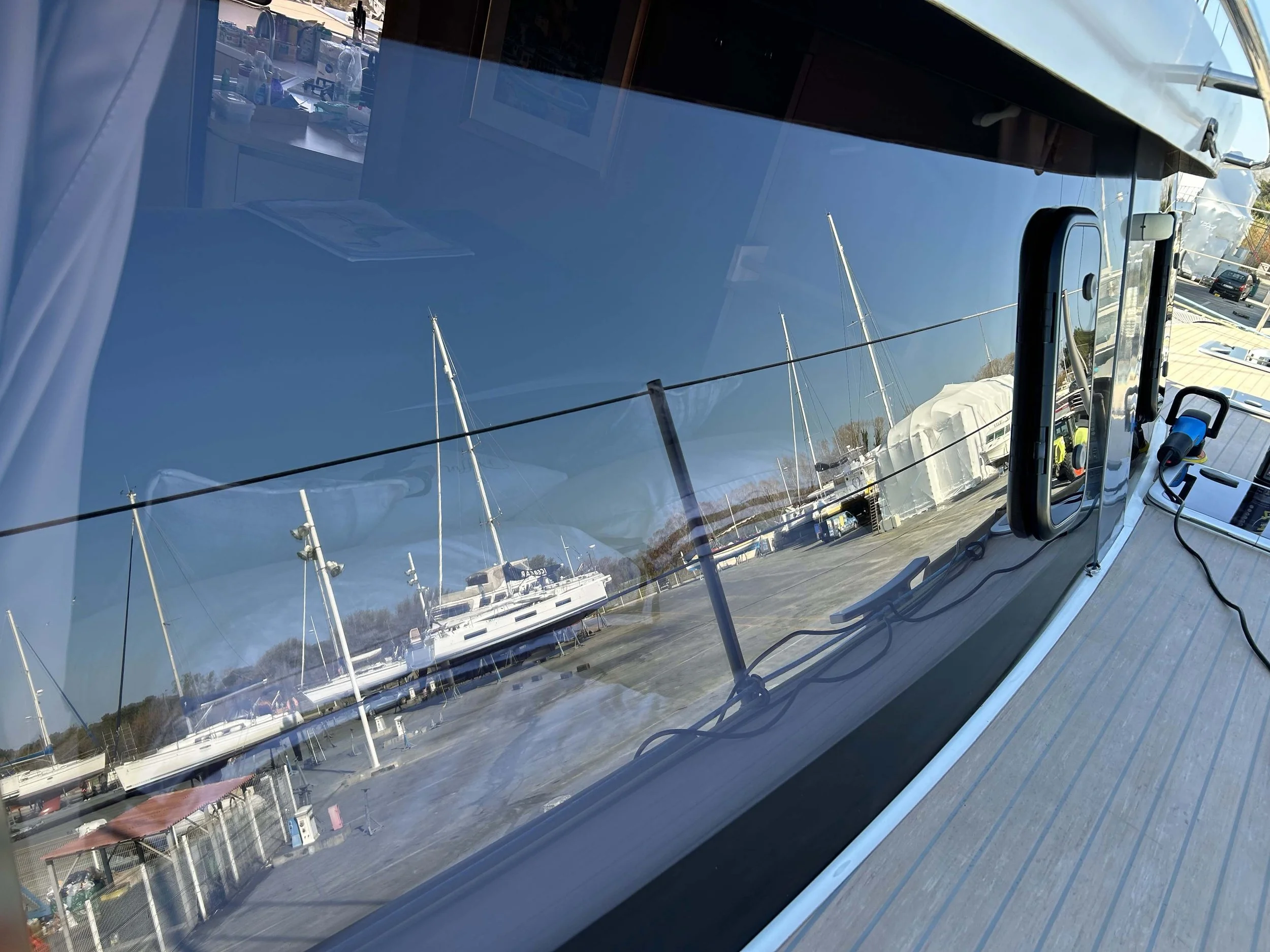
· A full polish of all the windows, removing much of the hazing and scratches. The windows were treated with a hydrophobic ceramic coating to provide protection and easier cleaning.
· A full polish of the outer hulls above the antifoul line, to remove some oxidation and marks from fenders used uncovered by the previous owner (we now have soft covers for all our fenders). Ahh, I discovered a downside to three hulls…..it took a week, perched on a platform with a rotary dual action polisher.
· Fixing more grabrails. There were none when we bought Skylark, and while heel is limited she still bounces about a bit in rougher seas, so I fitted five last year in the main thoroughfares, and two more now.
· A general spring clean, tidy up, locker clear out, bilge clean.
· A spares inventory check and restock. I am convinced sailing is just a means through which to visit a chandlers at every opportunity and pay higher prices just because it’s a ‘yacht thing’. When it comes to safety equipment or yacht specific items, fair enough, but when chandlers charge four times the price of a DIY store for general stuff like cable ties, hoses, tubing, screws, glues, switches, I baulk a bit. Sorry, rant over!
The weather played its part too. The infamous Tramontane, a gale-force north-westerly wind that funnels between the Pyrenees and Massif Central and spills out over the Golfe du Lion with destructive vigour, blew for 9 days straight, suspending any hull work due to dust and debris in the air. So we lost a week, which very sadly disrupted our plans to take a leisurely two-week coastal route from Canet to Rome, and instead gave us a mere 5 days to make the trip to get back on schedule. We are eternally grateful to Simon and Mark, two experienced sailors and great friends, who re-arranged flights and joined Nick for the trip. More of that in the next blog……
All in all the maintenance experience was fine, and made easier by the help and advice of Azure and their team effectively acting as project managers. If you have any questions or comments on the maintenance we had done, or our thoughts on Leucate and Canet as a base, drop us a line…..!