
Porto Turistico di Roma, Ostia.
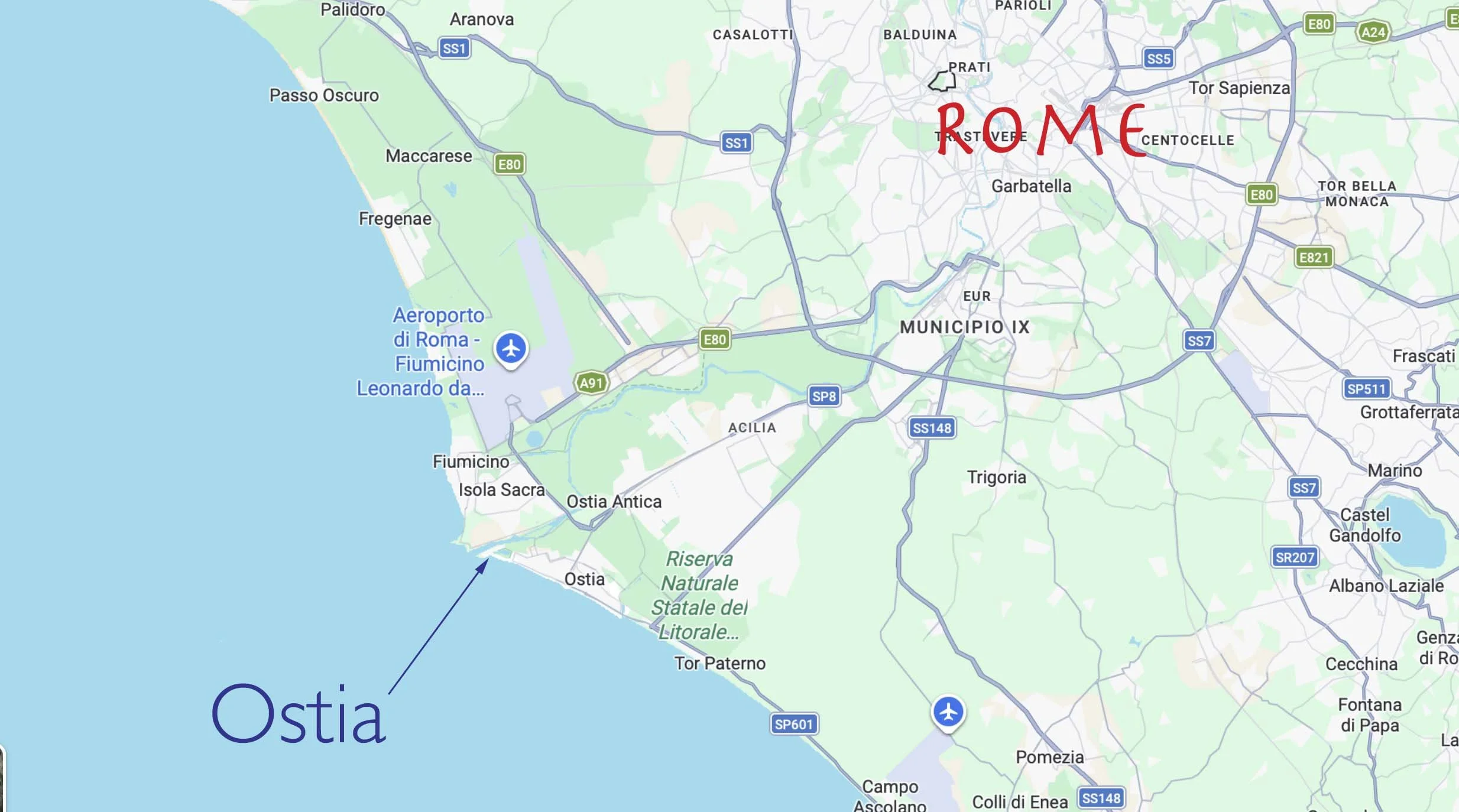
This is one long, long marina! From the shipyard and hard at the north end to the south end where the marina merges with Ostia town is over a kilometre, a wide boulevard with cycle lanes running its length. It has a piazza, dozen or so bars and restaurants, a helpful chandlery, a rigging shop, a specialist seamstress, a self-serve laundry, car hire and more. So just exploring the marina provides several thousand of your daily steps.
The welcome was truly friendly. Glenda in the office speaks good English and is a valuable source of knowledge about the local area. We were berthed on the outer north west mole, which is secure (huge metal gates operated by a key card) and away from the bustle of the main quays but is definitely the working part of the base and adds a further few hundred metres to walk over to the main stretch. The complex could do with a little updating here and there, but it’s clean, functions well, is secure, welcoming, good value and is about as close as yachts can get to Rome, reachable by train from Ostia in about 45 minutes. Of note for other sailors, the electric terminals are the five-pin variety. There weren’t any adapters available, but the marina office have new five-pin plugs for loan but which therefore needed wiring into our existing cables. We ended up ordering one through the on-site chandlery who had it for us the following morning - great service.
The modern town of Ostia is nothing fancy, but does have all the essentials. A long beach front with entertainment galore, several large supermarkets and all the useful shops you’d expect to find in a medium-sized town. Trains to Rome run every 20 minutes until nearly midnight (but check timetables… they can be irregular), and there are plenty of taxis, a bus route and hundreds of hire-by-the-minute electric scooters to get around – noting that the train station is some 2.5km from the marina through rather shabby residential areas before the centre of Ostia is reached. Rome Fiumicino airport is close by - 20 minutes and about 35 Euros by taxi, so the marina and town make a convenient crew swap location.
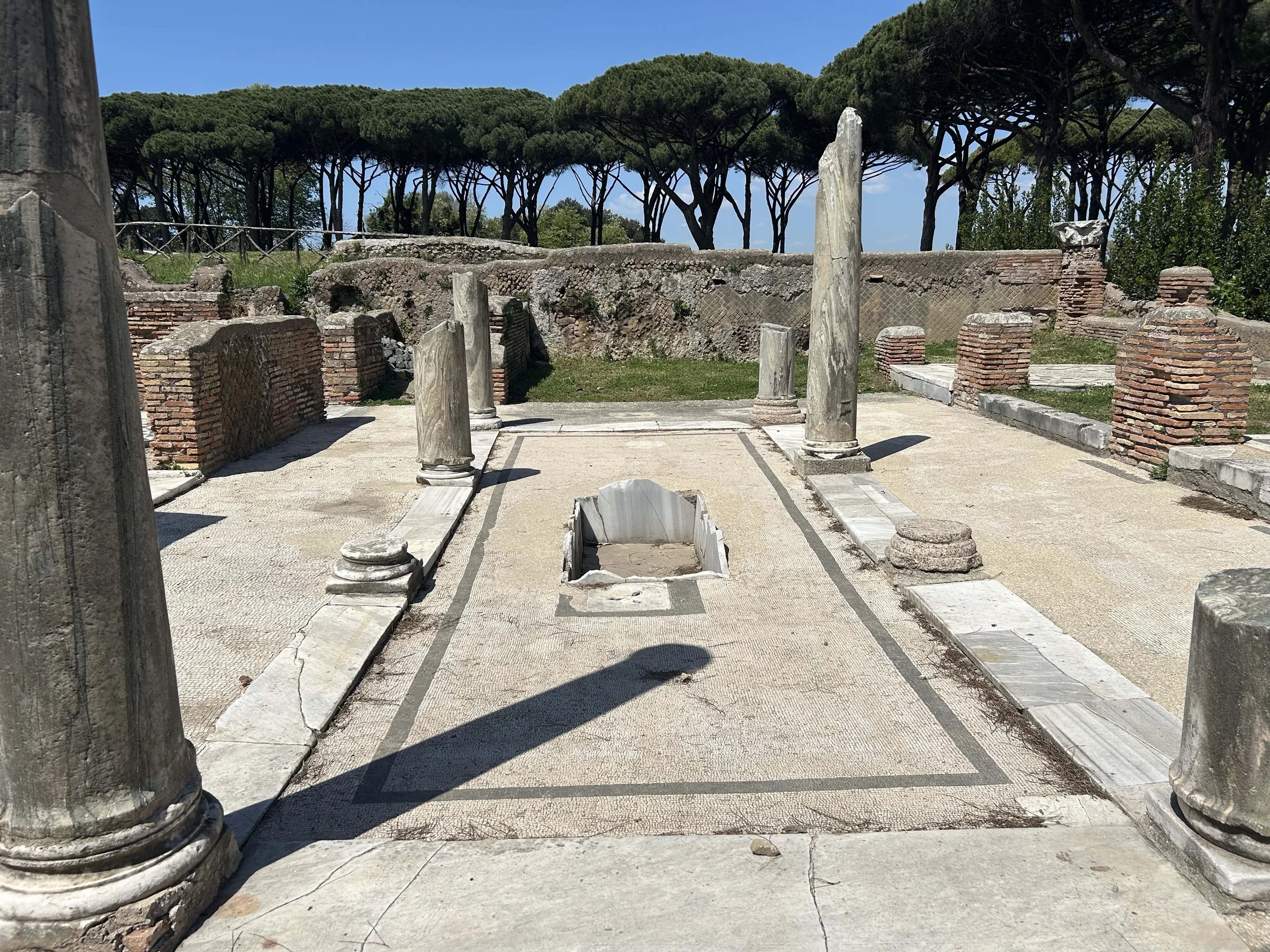
The real surprise for us was Ostia Antica, the ancient, original port that served Rome. Two thousand years ago it was a buzzing, vibrant town full of merchants, sailors, and tradespeople, providing work for over 50,000 residents at its peak in the second century AD. For comparison, Pompeii’s population is estimated at around 12,000. Ostia Antica fell into decline following a landslide in the fourth century which changed the route of the River Tiber, depleting the town of its main purpose and eventually enveloping the buildings in thick mud which has preserved them to an extraordinary extent. We spent several hours wandering around the ruins, which give a real sense of Roman life and are, in our opinion, a ‘must-do’ while in Ostia. They rival anything else in Italy.